Dancers require a unique set of physical abilities to perform at their best, including strength, flexibility, and balance. Pilates is a popular form of exercise that can help dancers improve their technique, prevent injuries, and enhance their overall performance. In this article, we’ll explore the many benefits of Pilates for dancers.
Enhanced Body Awareness and Control
One of the most significant benefits pilates provides to dancers is the enhancement of body awareness and control. Pilates can help dancers develop greater body awareness by focusing on proper alignment and control of movement. This, in turn, helps them execute movements with precision and grace.
Pilates exercises focus on engaging the core muscles, which are essential for maintaining proper alignment and balance. Through consistent Pilates practice, dancers can improve their stability and develop a greater sense of body awareness. This can help them execute movements more precisely and with greater control.
Some specific Pilates exercises that can improve balance, stability, and alignment for dancers include:
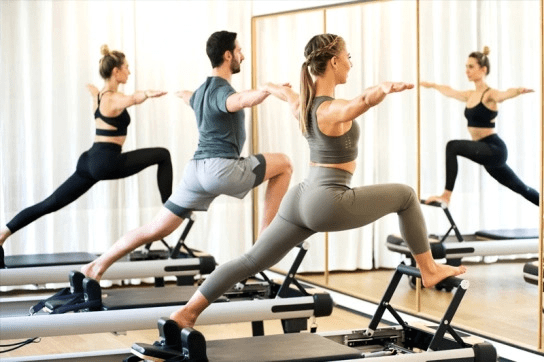
- Footwork on the Reformer: This exercise involves using the Reformer machine to work on foot alignment and stability. Dancers can use this exercise to improve their footwork and develop greater control over their movements.

- Single Leg Circles: This exercise is performed on a mat and involves moving the leg in a circular motion while maintaining proper alignment and control. Single Leg Circles can help dancers improve their stability and balance.
- Plank: Plank is a common exercise in Pilates and involves holding a position that engages the core muscles. This exercise can help dancers develop greater core strength and stability, which is essential for executing movements with control and precision.
- Spine Stretch Forward: This exercise is performed while sitting on a mat and involves stretching the spine forward while maintaining proper alignment. Spine Stretch Forward can help dancers improve their posture and alignment.
In addition to these specific exercises, Pilates practice in general can improve body awareness and control for dancers. Through consistent practice, dancers can develop a greater sense of how their body moves and how to control their movements more precisely. This, in turn, can help them execute movements with greater ease and grace, ultimately enhancing their overall performance.
Increased Flexibility and Range of Motion
Pilates is a highly effective form of exercise that has been used by dancers for many years to increase flexibility and range of motion. Pilates focuses on building strength and flexibility in the body’s core muscles, which in turn improves overall movement quality and range of motion.
One of the primary ways in which Pilates improves flexibility is by targeting the muscles and joints that are most commonly used in dance movements. For example, Pilates exercises such as the “spine stretch” and “hip circles” target the muscles of the back and hips, which are essential for achieving a full range of motion in many dance styles.
Pilates exercises also help to improve joint mobility by increasing the circulation of synovial fluid in the joints. This fluid acts as a lubricant, allowing the joints to move more freely and reducing the risk of injury. Pilates exercises such as the “leg circles” and “shoulder bridge” target the hip and shoulder joints, respectively, helping to improve mobility and range of motion in these areas.
Another way in which Pilates can improve flexibility is by increasing the length of the muscles themselves. Pilates exercises such as the “forward fold” and “hamstring stretch” target the muscles of the legs and lower back, helping to increase their length and improve overall flexibility.
Overall, Pilates is an excellent way for dancers to improve their flexibility and range of motion. By targeting the muscles and joints that are most commonly used in dance movements, Pilates can help dancers achieve greater fluidity and grace in their movements, while also reducing the risk of injury. With consistent practice, Pilates can help dancers achieve the flexibility and range of motion necessary to excel in their art form.
Strengthening and Toning
Pilates is a full-body workout that can help dancers build strength and tone their muscles. Pilates focuses on developing a strong core, as well as targeting the legs, arms, and back muscles. Pilates exercises are designed to be slow and controlled, with a strong emphasis on proper form and alignment. By practicing Pilates regularly, dancers can improve their overall fitness and performance.
One of the key benefits of Pilates for dancers is the strengthening of the core muscles. The core muscles include the abdominals, back muscles, and pelvic floor muscles. These muscles work together to support the spine and help maintain good posture. A strong core is essential for dancers, as it provides a stable base for movements and helps prevent injury. Pilates exercises such as the hundred, the teaser, and the plank can all help strengthen the core muscles.
In addition to strengthening the core, Pilates can also help tone the legs and back muscles. Pilates exercises such as leg circles, leg lifts, and squats can all help tone the leg muscles, while exercises such as the swan and the spine stretch can help tone the back muscles. By practicing Pilates regularly, dancers can develop lean, toned muscles that are both strong and flexible.
Another benefit of Pilates for dancers is that it can help improve balance and coordination. Many Pilates exercises require the practitioner to maintain a stable base while performing movements with the arms or legs. This can help improve overall balance and coordination, which are essential for dancers. Pilates exercises such as the single-leg circles, the side leg lifts, and the standing leg pumps can all help improve balance and coordination.
Prevents Injuries and Speeds up Recovery
Dance is a physically demanding art form that requires strength, flexibility, and endurance. As dancers push their bodies to perform intricate movements and routines, they can be at risk for injuries that may sideline them from their passion for extended periods of time. Pilates can play an important role in preventing dance-related injuries and aiding in rehabilitation.
One of the main benefits of Pilates for dancers is its focus on correcting muscle imbalances and improving overall alignment. Dancers often develop muscle imbalances due to the repetitive movements of their craft, which can lead to injury over time. Pilates exercises target specific muscle groups to strengthen weak areas and lengthen tight ones, leading to better overall balance and symmetry in the body.
Pilates can also be an effective tool for rehabilitating dance-related injuries. Many Pilates exercises are low-impact and can be modified to accommodate injuries or mobility limitations. For example, dancers recovering from ankle sprains can benefit from exercises that target the muscles around the ankle to help strengthen and stabilize the joint. Similarly, dancers with lower back pain can benefit from Pilates exercises that focus on improving core strength and spinal alignment.
Another key benefit of Pilates for dancers is that it can help improve proprioception, or the body’s awareness of its position in space. This can help dancers better control their movements and prevent injuries that may occur due to misalignment or loss of balance.
Specific Pilates exercises that can benefit dancers include those that focus on the core, hips, and feet. Exercises such as the pelvic curl and leg circles can improve core strength and hip mobility, while footwork on the Pilates reformer can help dancers develop greater stability and control in their footwork.
Improves Breathing and Endurance
Pilates is not just a form of physical exercise, but also emphasizes the importance of proper breathing techniques. Dancers who incorporate Pilates into their training can improve their breathing patterns and increase their endurance during performances.
One of the key principles of Pilates is breathing, specifically deep and controlled inhalation and exhalation. Proper breathing can improve the efficiency of the respiratory system and increase the oxygen flow to the muscles, which can enhance endurance and reduce fatigue. In addition, breathing techniques can help to reduce stress and anxiety, which can have a positive impact on both physical and mental performance.
Pilates exercises that incorporate breathing techniques can also help to strengthen the diaphragm and other respiratory muscles, leading to improved lung capacity and oxygen uptake. For dancers, this can translate to improved endurance and stamina during long performances or rehearsals.
One popular Pilates exercise for improving breathing and endurance is the Hundred. In this exercise, the practitioner lies on their back with their legs in a tabletop position and their arms extended above their head. They then inhale for five counts while pumping their arms up and down, and exhale for five counts while continuing the arm movements. This exercise can be repeated for multiple sets to help improve lung capacity and endurance.
Another Pilates exercise that can improve breathing and endurance is the Roll Up. This exercise involves lying on the back and slowly rolling up to a seated position, using controlled breathing and core engagement. The Roll Up can help to strengthen the abdominal muscles, improve posture, and enhance breathing efficiency.
Incorporating Pilates into a dancer’s training regimen can have significant benefits for breathing and endurance, leading to improved performance on stage and in rehearsals.
Mental Focus and Stress Relief
Pilates offers dancers mental focus and stress relief by incorporating controlled movements, breath work, and mindfulness. It helps dancers enhance their concentration, stay present in the moment, and release tension and anxiety. This promotes a calm and focused mindset, allowing dancers to perform at their best.
Conclusion:
Pilates is a versatile and effective form of exercise that can benefit dancers of all levels and styles. By improving core strength, enhancing flexibility, developing neuromuscular control, preventing injuries, and improving breathing and endurance, Pilates can help dancers achieve their full potential and improve their overall performance. If you’re a dancer looking to enhance your technique and prevent injuries, Pilates may be just what you need.

 TSquared Pilates
Leave a comment