Are you looking for a low-impact exercise that can help you improve your posture, flexibility, and core strength? Look no further than Pilates. Originally developed by oseph Hubertus Pilates in the early 20th century, Pilates has become a popular exercise method around the world. In this article, we will explore what Pilates is, its principles, benefits, different types, levels, and who can benefit from it.
What is pilates?
Pilates is a low-impact exercise that focuses on improving core strength, posture, and flexibility. It was developed by Joseph Pilates in the early 20th century as a method of rehabilitation and has since gained popularity as a form of exercise. Pilates involves a series of exercises that focus on controlled movements and breathing techniques.
The principles of Pilates
Pilates is based on six principles: concentration, control, centering, precision, breathing, and flowing movement.
- Concentration involves focusing your mind on the movement and muscle groups being used.
- Control is about moving with intention and purpose.
- Centering is the focus on the core muscles in the abdomen, lower back, and hips.
- Precision involves performing each movement with accuracy and attention to detail.
- Breathing is an essential component of Pilates, with an emphasis on using breath to coordinate movement.
- Finally, flowing movement is about smooth transitions between exercises.
The benefits of Pilates

Pilates has numerous benefits, including improved posture and flexibility, enhanced core strength and stability, increased muscular endurance and balance, reduced risk of injury and pain, decreased stress and anxiety, and better relaxation and sleep. Pilates can also help with weight loss and toning.
Improved core strength: Pilates focuses on strengthening the deep muscles of the core, including the abdominals, back, and pelvic floor. This leads to better posture, stability, and overall core strength.
Increased flexibility: Pilates exercises incorporate stretching and lengthening movements, which help improve flexibility and joint mobility. Increased flexibility can enhance your range of motion, reduce muscle stiffness, and prevent injuries.
Enhanced body awareness: Pilates emphasizes precise movements and body alignment. Through the practice, you develop a heightened sense of body awareness, which can improve your posture, coordination, and movement efficiency.
Better posture: Pilates exercises target the muscles responsible for maintaining good posture, such as the deep abdominals and the muscles around the spine. Regular practice can help correct imbalances, relieve muscle tension, and promote proper alignment, leading to improved posture both during exercise and in daily life.
Increased muscle strength and tone: Pilates engages and tones muscles throughout the body, including the arms, legs, glutes, and back. The exercises use body weight and resistance to build strength without adding bulk, resulting in long, lean muscles.
Improved balance and stability: Pilates exercises emphasize core stability and balance, which can help improve your overall stability and control in everyday movements and activities.
Injury prevention and rehabilitation: Pilates is widely used in rehabilitation settings because it is gentle on the joints and can be adapted to accommodate various physical limitations. It helps strengthen weak muscles, improve flexibility, and restore proper movement patterns, making it effective for injury prevention and recovery.
Stress relief and relaxation: Pilates incorporates mindful breathing techniques and encourages focus and concentration, which can help reduce stress, promote relaxation, and enhance mental well-being.
Increased energy and vitality: Regular Pilates practice can boost your energy levels, improve circulation, and enhance overall vitality.
Improved athletic performance: Many athletes and sports enthusiasts incorporate Pilates into their training routines to enhance core strength, flexibility, and body control, which can improve performance in various sports and physical activities.
The different types of Pilates
There are several types of Pilates, including mat Pilates, reformer Pilates, Cadillac Pilates, chair Pilates, and barrels Pilates.
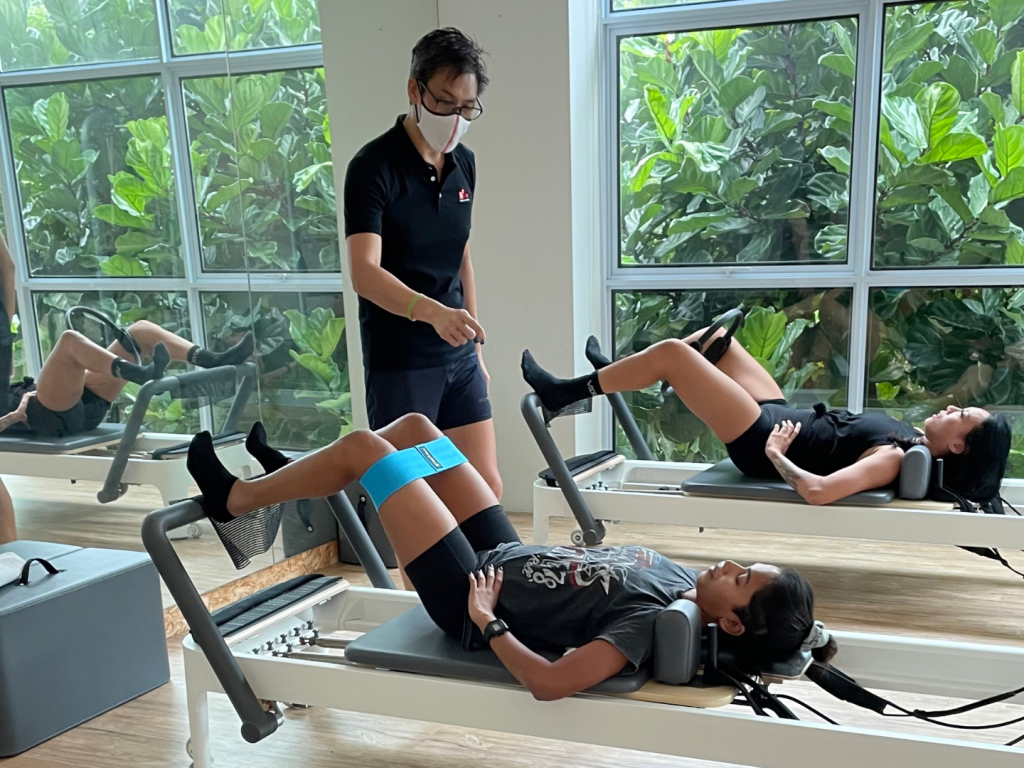
Mat Pilates involves exercises performed on a mat, while Reformer Pilates uses a machine that provides resistance. Cadillac Pilates involves a specialized apparatus that includes a bed-like structure with springs and bars. Chair Pilates involves a chair with attached springs and bars for resistance, and barrels Pilates uses specialized barrel-shaped equipment.
The different levels of Pilates
Pilates can be practiced at different levels, including beginner, intermediate, and advanced. Beginners will learn the basics of Pilates, including breathing techniques and proper form. Intermediate Pilates involves more advanced exercises, and advanced Pilates is for experienced practitioners who want to challenge themselves.
Who can benefit from Pilates

Pilates is suitable for people of all ages and fitness levels. Athletes can benefit from Pilates to improve their performance, and seniors can use it to maintain their balance and flexibility. Pregnant women can use Pilates to prepare for labor and delivery, and people with injuries or chronic pain can use it as a form of rehabilitation. Anyone looking for a low-impact workout can benefit from Pilates.
Conclusion
Pilates is a low-impact exercise method that can provide numerous benefits, including improved posture, core strength, flexibility, and stress reduction. With different types and levels of Pilates available, anyone can benefit from this form of exercise. So why not give Pilates a try and see how it can benefit you?
FAQs
Q: What should I consider when choosing a workout routine?
A: When choosing a workout routine, you should consider your fitness goals, your current fitness level, your schedule, your budget, and your personal preferences.
Q: What are some popular types of workout routines?
A: Some popular types of workout routines include strength training, cardio, high-intensity interval training (HIIT), yoga, Pilates, and group fitness classes.
Q: How many days a week should I work out?
A: It’s recommended that adults aim for at least 150 minutes of moderate-intensity or 75 minutes of vigorous-intensity aerobic activity each week, spread out over at least three days.
Q: Should I do the same workout routine every day?
A: It’s not recommended to do the same workout routine every day, as your body needs time to rest and recover. It’s important to mix up your workouts and vary your intensity to challenge your body and prevent boredom.
Q: How can I stay motivated to stick to my workout routine?
A: To stay motivated, it’s helpful to set specific, measurable goals, find a workout buddy or accountability partner, track your progress, reward yourself for milestones, and remind yourself of why you started in the first place.
Q: Is it better to work out in the morning or evening?
A: The best time to work out is whenever you can consistently make it a part of your routine. Some people prefer to work out in the morning to start their day off on a healthy note, while others prefer to work out in the evening to relieve stress after a long day.

 TSquared Pilates
Leave a comment